
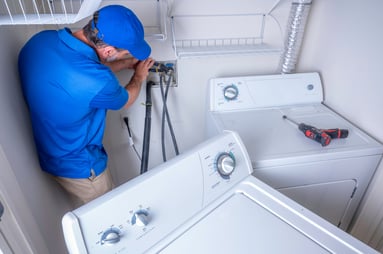
Installing a new appliance can feel as simple as putting it in place and connecting a few hoses. For appliances that rely on your home's plumbing or gas lines, however, proper installation can make a major difference. Dishwashers, washing machines, refrigerators, garbage disposals, water softeners, and other household appliances require water, drain, or gas lines to work properly.
A small installation mistake can lead to leaks, water damage, drainage problems, or an appliance that does not perform as expected. If you're planning an appliance install, contact That Plumber to make sure your new appliance is properly installed and ready for everyday use.
Which Appliances Require a Plumber for Installation?
Many common household appliances interact directly with your plumbing or gas systems. Depending on the appliance and your home's existing setup, installation may involve water lines, drains, shut-off valves, gas lines, or other components.
Dishwashers
Dishwashers require both a water supply line and a drain line. Proper installation helps prevent leaks and drainage problems while ensuring the appliance has the water supply it needs.
That Plumber can inspect the existing lines, install or replace necessary components, and test the dishwasher for leaks after installation.
Washing Machines
Washing machines typically use both hot and cold water lines and require a properly positioned drain. Worn hoses, loose fittings, or damaged valves can increase the risk of leaks and water damage.
Having a plumber handle the installation also provides an opportunity to inspect existing hoses and valves and replace worn components when needed.
Refrigerators and Ice Makers
Refrigerators with water dispensers or ice makers require a dedicated water line. If your kitchen does not already have one, a new line may need to be installed.
That Plumber can install or replace a refrigerator water line and check the setup for leaks before your new refrigerator is put into regular use.
Garbage Disposals
Garbage disposals connect to the kitchen sink's drainage system and may also connect to the dishwasher drain. Proper installation helps ensure wastewater drains correctly and reduces the chance of leaks beneath the sink.
Water Softeners
Water softeners connect directly to your home's water supply and require proper drainage. Correct installation helps ensure the system is ready to provide softened water throughout your home.
Reverse Osmosis Systems
Under-sink reverse osmosis systems typically require access to the home's water supply and drain, along with a dedicated drinking water faucet. Having a plumber install the system can help prevent leaks and make sure it is set up correctly.
Gas Dryers
Gas dryers require a properly installed gas supply line in addition to the other appliance requirements. A plumber can inspect the existing gas line or install a new line when necessary.
Gas Ranges and Cooktops
Gas ranges and cooktops also require a gas supply line. If you're replacing an appliance, remodeling your kitchen, or switching to gas, a plumber can inspect, replace, or install the necessary gas line.
Sump Pumps
Although not a traditional household appliance, a sump pump is an important plumbing-connected system. Proper installation helps the system move unwanted water away from your home and reduce the risk of basement flooding.
Why Hire a Plumber for Appliance Installation?
DIY installation can be tempting, especially when you're replacing an appliance in the same location. However, water, drain, and gas lines can create problems when they are worn, damaged, or installed incorrectly.
Having a plumber install your appliance provides several benefits:
-
Reduced risk of leaks: Water lines, hoses, valves, and fittings can be inspected and tested during installation.
-
Proper drainage: Drain lines can be positioned correctly to help wastewater flow as intended.
-
Existing line inspection: Older hoses, valves, and fittings can be checked for wear or damage.
-
New line installation: Water or gas lines can be added when the appliance requires a connection that is not already available.
-
Proper setup: The appliance can be installed according to its plumbing or gas requirements.
-
Fewer future problems: Identifying worn or incompatible components during installation can help prevent problems later.
When Does Appliance Installation Require New Plumbing?
Replacing an appliance does not always mean your existing plumbing is ready for the new one. Changes may be necessary when the appliance has different requirements or is being installed in a new location.
You may need plumbing modifications if you are:
-
Adding a dishwasher where there wasn't one previously
-
Moving a washing machine to another area of the home
-
Installing a refrigerator with a water dispenser or ice maker
-
Adding a water softener or reverse osmosis system
-
Installing an appliance that requires a new gas line
-
Replacing old or damaged shut-off valves
-
Remodeling a kitchen or laundry room
-
Adding or relocating water supply or drain lines
That Plumber can evaluate your existing setup to determine what needs to be changed before installation begins. Call That Plumber today to schedule your appliance installation service.
Schedule Your Appliance Install
A new appliance is an investment in your home. Making sure it is installed correctly can help protect your appliance and your home from preventable leaks, drainage problems, and water damage.
Whether you're installing a dishwasher, washing machine, refrigerator, garbage disposal, water softener, reverse osmosis system, gas appliance, or another appliance that requires plumbing work, That Plumber can help.
Contact That Plumber today to schedule your appliance install and get your new appliance set up properly.